Project 02 of 06 / Autonomy
ADA²M autonomous drone
A two-person project developing an agricultural monitoring drone. I work on the mechanical package and autonomy integration. The aircraft is flying, with stability tuning and sensor integration in progress.
- Role
- Mechanical and autonomy
- Team
- Two people
- Period
- 2025 to now
- Status
- Flight testing
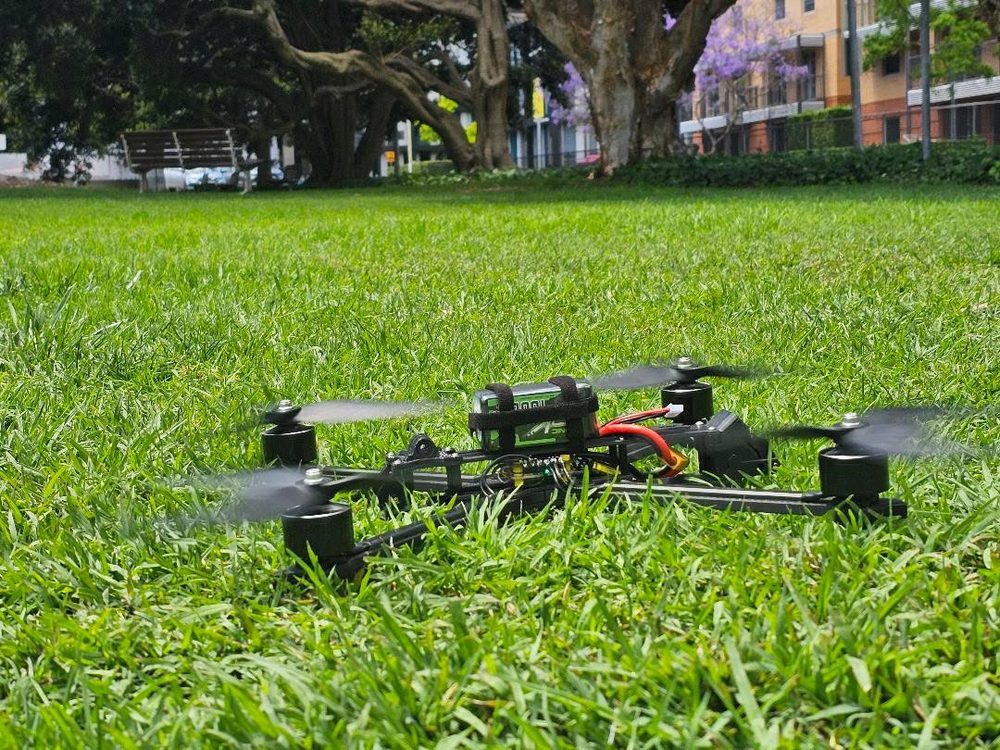
Flight test
From the workbench to short flights.
The flight-test footage shows the aircraft lifting from the grass and flying close to the ground. It documents an early flight test, not a completed autonomous monitoring mission.
Read the video description
The quadcopter lifts a short distance above a grass lawn. Several views show the aircraft moving close to the ground and resting on the grass between attempts. The video demonstrates take-off and low-level flight, without measured endurance or stability results.
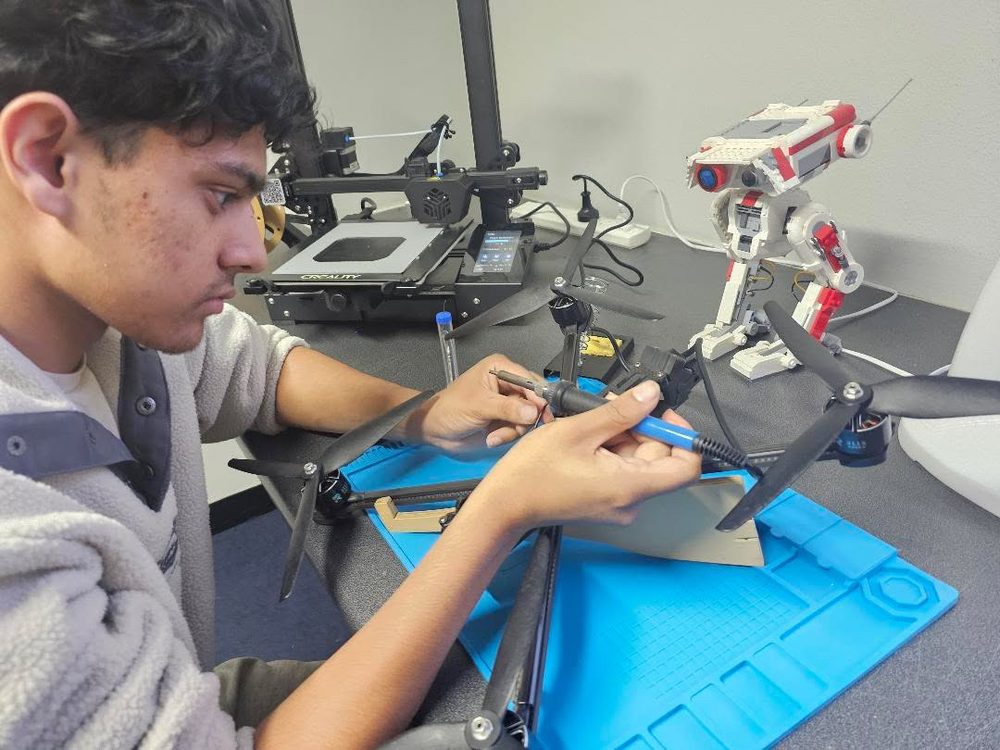
The brief
Collect useful environmental data without walking the whole property.
Small scale farmers cannot instrument every corner of a paddock, and spot readings from one weather station do not describe a field. The goal is for ADA²M to follow a predefined coverage route and log environmental measurements along it. The engineering problem is packaging: an airframe, a flight controller, a long range link, onboard compute and a sensor payload all have to fit inside a mass and power budget that does not move.
Architecture
The intended monitoring and control stack.
Scroll sideways to see the whole diagram
- Airframe
- Custom carbon fibre frame
- Long range link
- TBS Crossfire
- Design tool
- SolidWorks
- Software
- C++ and Python
Engineering work
Mechanical packaging and staged integration.
- Package the flight stack. Design the carbon fibre frame around the propulsion, control and compute hardware rather than fitting the hardware to a stock frame.
- Connect autonomy to flight. Integrate Jetson Nano inference with onboard decision making so the aircraft can act on what it sees.
- Design for range. Use a TBS Crossfire link for long-range control and telemetry. The operating envelope still requires flight validation.
- Test in steps. Move from short hops to stability tuning before expanding sensor and autonomy capability, so changes can be evaluated incrementally.
Programme
Developed with Project Umbrella Labs.
ADA²M runs under Project Umbrella Labs, the student engineering startup I co-founded at UNSW. The lab works across autonomous UAVs, neural interfaces and agricultural monitoring, and runs its projects as rapid prototype, test, revise cycles.
Status
Airborne, and still being tuned.
Current status
The aircraft flies and is in stability tuning, with sensor integration continuing alongside it. Endurance, payload and coverage figures will be published once the test programme produces numbers I can stand behind.